SEEC Members Renew U.S. Climate Leadership at COP31
Washington, D.C. – This week, 18 members of the House of Representatives, including House Sustainable Energy and Environment Coalition (SEEC) Vice Chairs Reps. Don Beyer (VA-08), Suzanne Bonamici (OR-01), Sean Casten (IL-06), and Mike Levin (CA-49), as well as Reps. Yassamin Ansari (AZ-03), Ami Bera (CA-06), Kathy Castor (FL-14), Salud Carbajal (CA-24), Adriano Espaillat (NY-13), Maxine Dexter (OR-03), Jared Huffman (CA-02), Jonathan Jackson (IL-01), Teresa Leger Fernández (NM-03), Lucy McBath (GA-06), Dave Min (CA-47), Emily Randall (WA-06), Raul Ruiz (CA-25), and Nikema Williams (GA-05), joined the international climate community at the 31st Conference of Parties (COP31) in Antalya, Türkiye to renew and strengthen U.S. engagement on climate leadership on the global stage. The member delegation reaffirmed partnerships and highlighted shared challenges, including topics ranging from energy affordability and clean electrification to food security and disaster resilience. Members returned to Congress with new relationships and new ideas to build a more affordable, clean, and healthy future for our nation and the world.
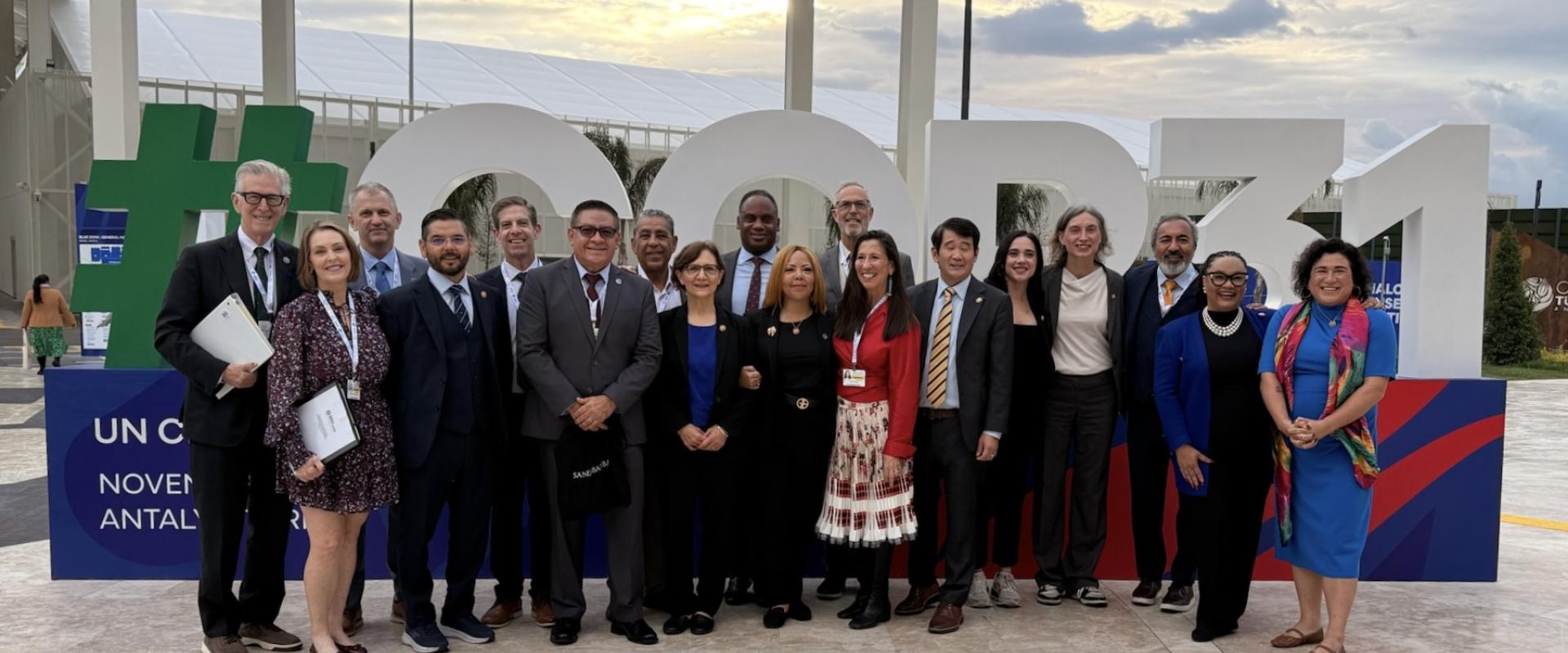
SEEC members participated in events across 8 themes.
Forests, Nature, and Natural-Capital Resilience
SEEC members highlighted how protecting and restoring ecosystems can preserve nature’s capacity to absorb and sequester carbon, while bolstering climate resilience for our planet.
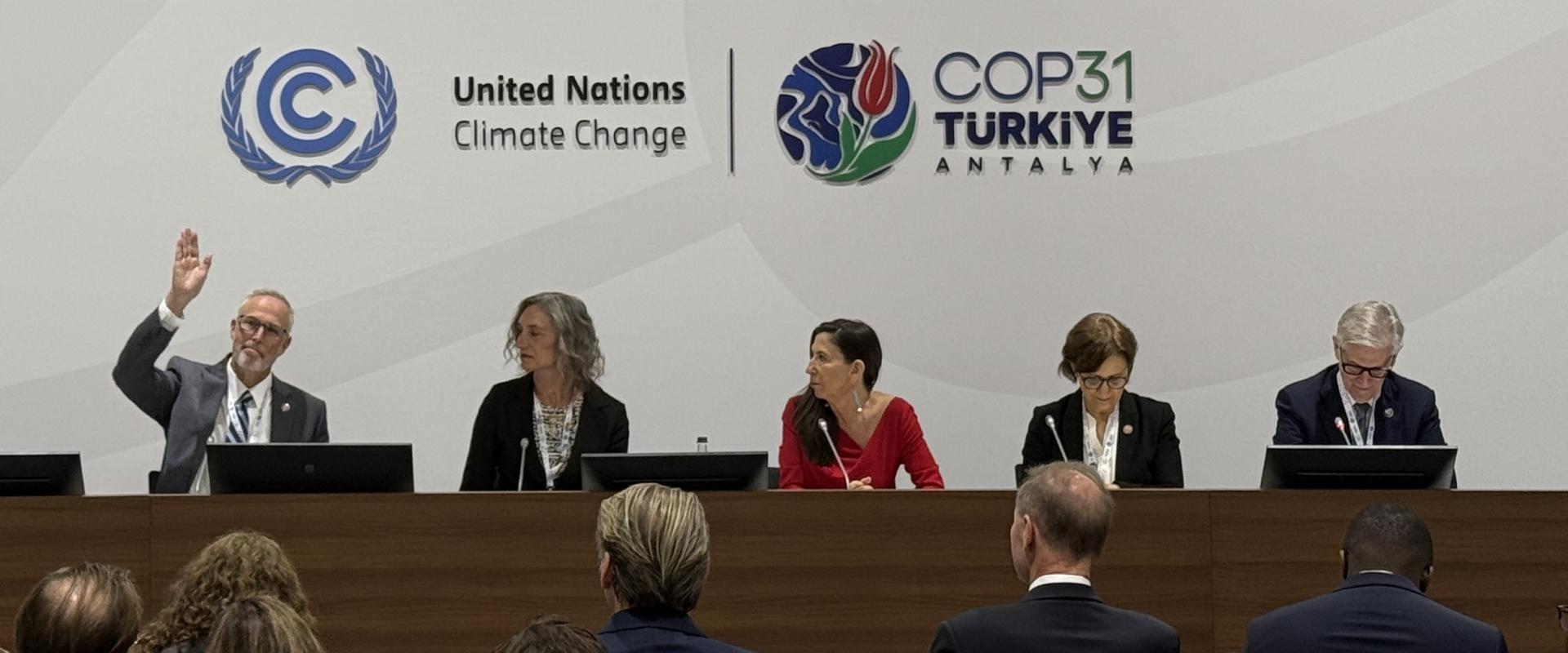
“For millions of people around the world, forests sustain their livelihoods, provide clean water, and store the carbon we desperately need to keep out of the atmosphere,” said House Natural Resources Committee Ranking Member Jared Huffman (CA-02). “As climate change fuels more destructive wildfires and floods, protecting the forests we still have and restoring those we’ve lost is essential to protecting communities, supporting local economies, and giving people a say in the future of the lands they depend on. We’ll fight to keep public lands in public hands, restore the lands and waters our communities depend on, and cut the pollution that’s making these disasters worse.”
Adaptation, Disaster Resilience, & Community Preparedness
SEEC members joined panels and discussions on adaptation, disaster resilience, and community preparedness to highlight how adaptation must be a central pillar of climate action.
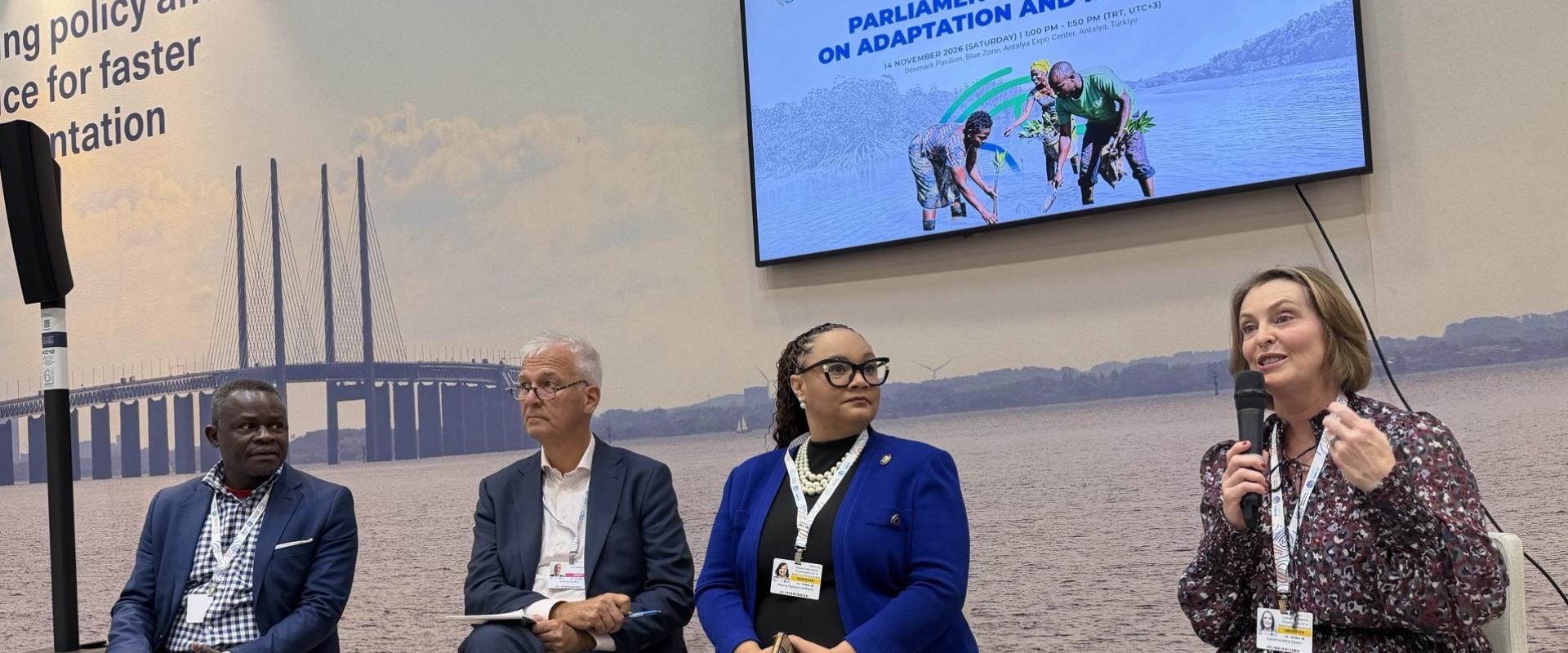
“Extreme weather threatens our critical infrastructure and makes life more expensive – something my neighbors in Tampa Bay know too well,” said Congresswoman Kathy Castor (FL-14). “At COP, we showed up to work with and learn from our international partners to address these shared challenges together. We’re ready to put SEEC Institute’s Thriving Economy Project into action – our blueprint to lower costs, strengthen American leadership, and make our communities safer.”
Clean Electrification, Climate Finance, and Private-Sector Competitiveness
SEEC Members engaged with experts in the clean electrification and climate finance space, and engaged with private sector voices from around the world.
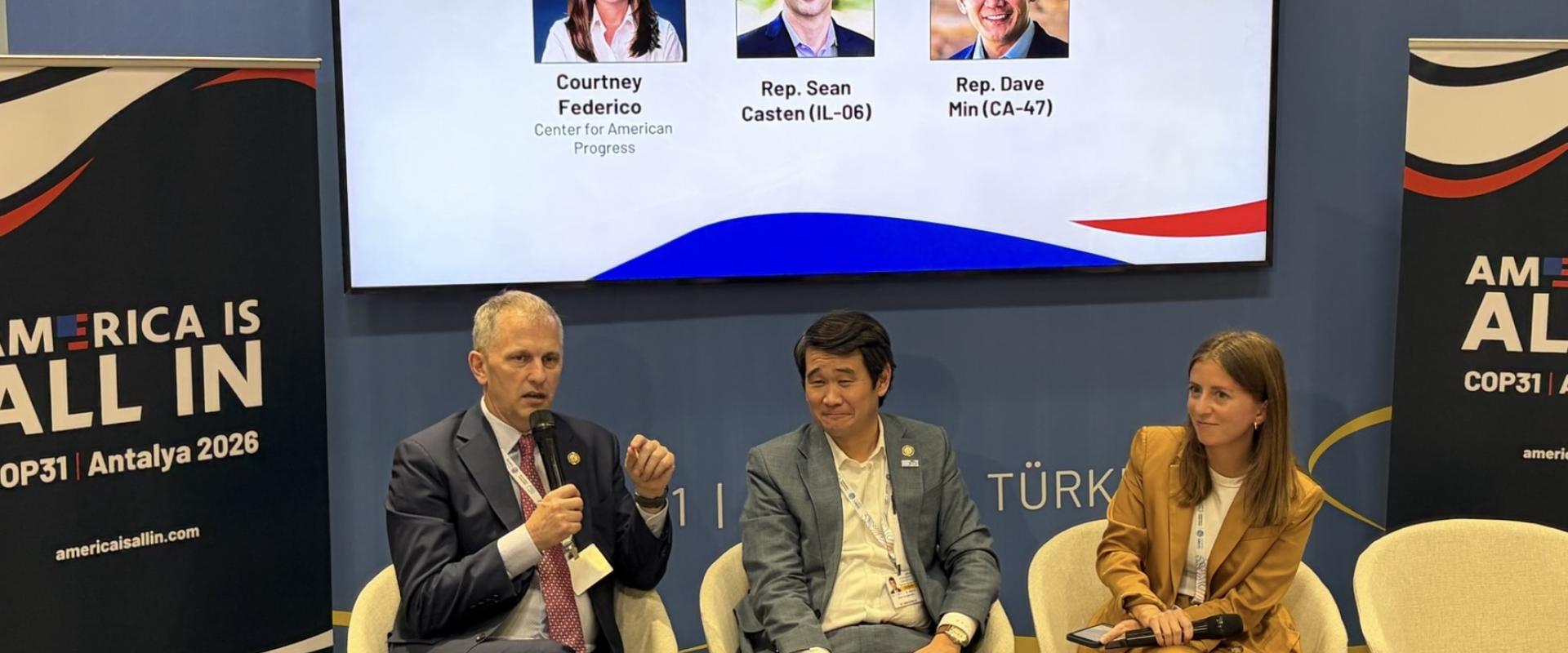
“Anyone who can access electricity, heat, and transportation without burning fossil fuels not only lowers their costs, but also cuts down on pollution and helps provide a livable planet to our children and grandchildren,” said Congressman Sean Casten (IL-06). “Clean electrification is the moral and economically smart path forward for anyone interested in helping both their pocketbooks and our future. It's an imperative next step in addressing both the cost-of-living crisis and climate crisis."
Ocean, Science, & Coastal Resilience
SEEC Members participated in events related to ocean, science, and coastal resilience to highlight how the climate crisis is transforming marine ecosystems and coastal livelihoods.
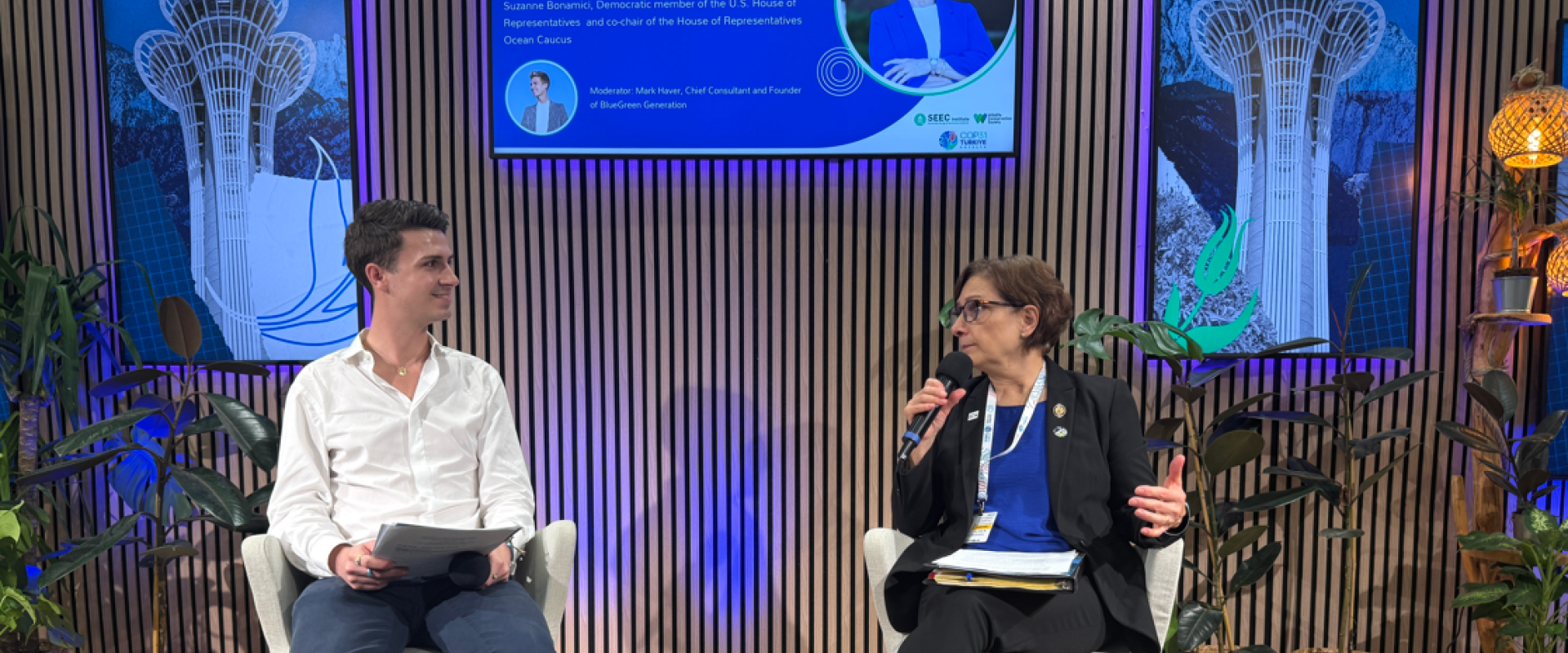
“The ocean has given us time we did not earn,” said Congresswoman Suzanne Bonamici (OR-01). “It has absorbed our emissions, buffered our climate, and fed our communities. The challenge now is whether we will answer that generosity with responsibility. If we get the science right, and we get the trust right, ocean carbon removal will have a fair chance to prove itself and we will have the evidence to decide wisely. The ocean, and the communities that depend on it, deserve our best evidence and our full partnership.”
Transatlantic Industrial, Trade, and Energy Policy
SEEC Members highlighted how the U.S. and Europe must work together to transition away from fossil fuel dependence.
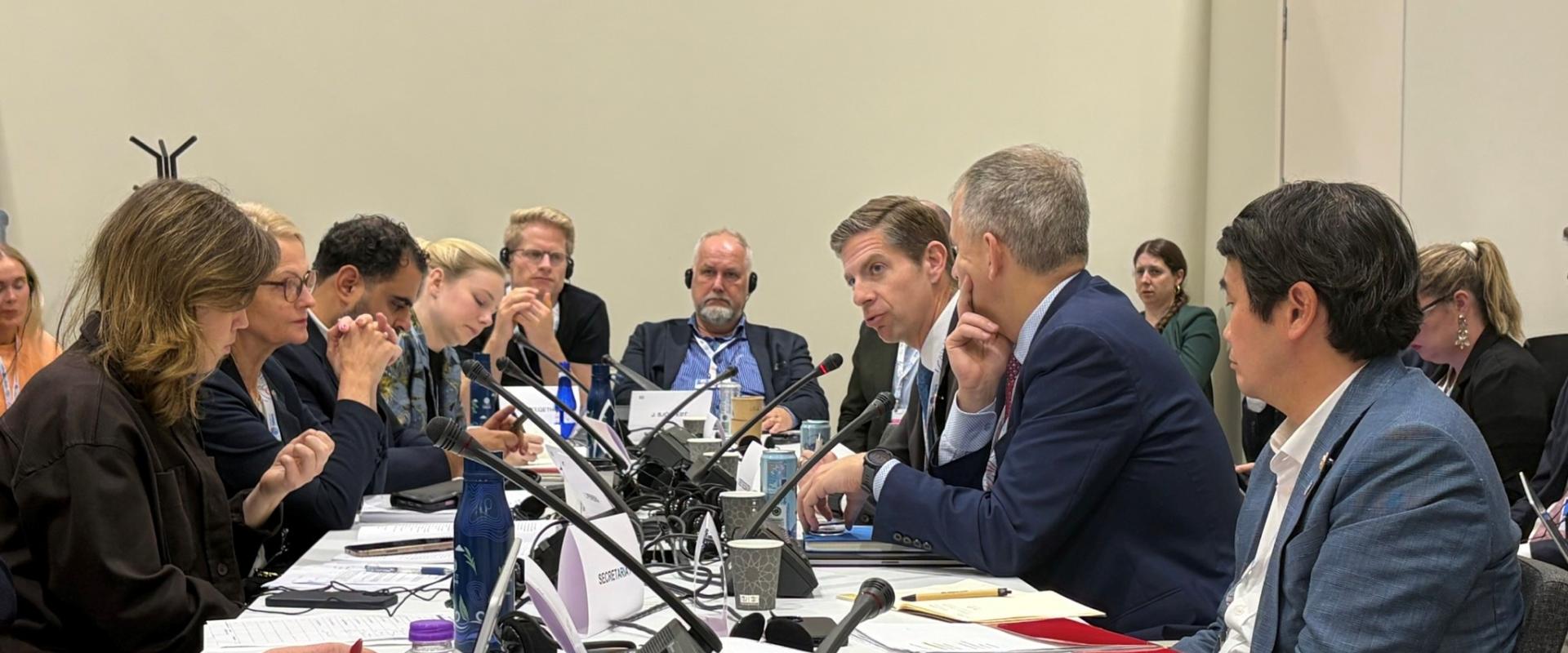
“The United States and Europe have a shared responsibility to lead the global transition away from fossil fuels,” said Congressman Mike Levin (CA-49). “That means working together to accelerate clean energy deployment, strengthen our economies, and reduce our dependence on fossil fuel markets. Our transatlantic partnership is essential to building a cleaner, more secure, and more affordable energy future.”
Climate Equity, Mobility, and Community Leadership
SEEC Members highlighted how the climate challenge exacerbates existing social inequities and climate solutions must expand economic opportunity, while giving communities agency in shaping their futures.
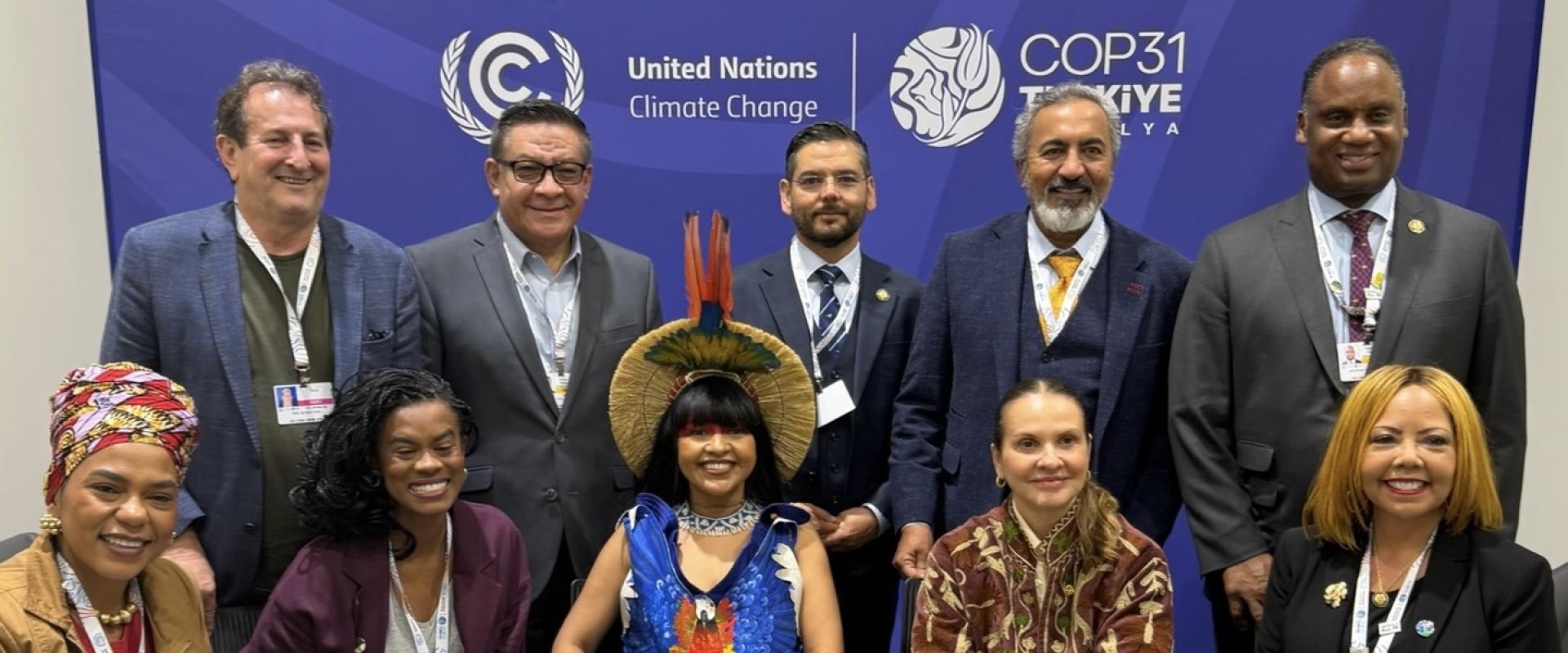
“The families with the least wealth, insurance, and political voice are hit first and recover last, from Chicago to the Horn of Africa to the Caribbean. Congress’ job is to help people stay home safely where they can, and move with dignity when they can’t,” said Congressman Jonathan Jackson (IL-01). “I am proud to lead the Congressional Diversity, Equity, and Inclusion Caucus in the House of Representatives. Equity should not be a controversial topic, and I am proud to be here with you today to discuss how we can work together on equitable solutions to the climate crisis.”
Climate, Energy, and National Security
SEEC Members joined discussions on how climate resilience, clean energy deployment, and international cooperation are essential to our collective security.
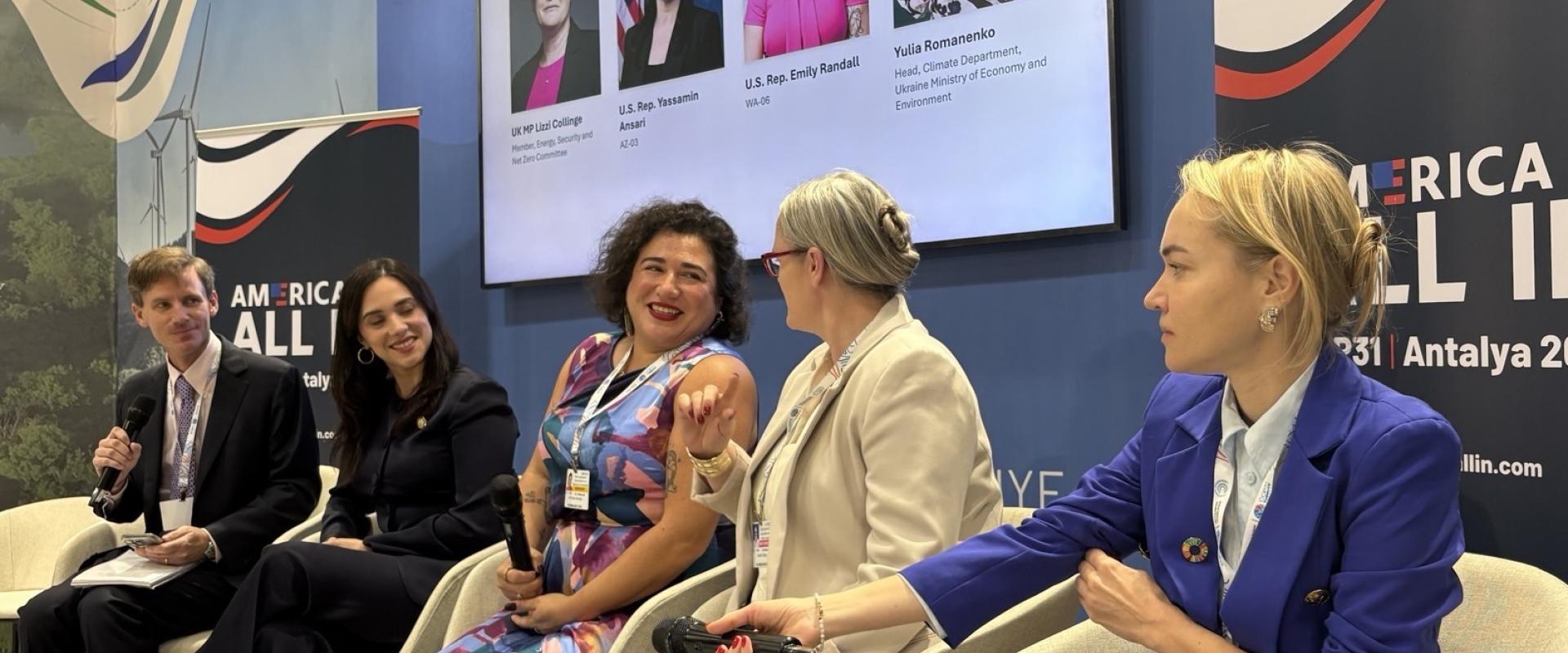
“Now more than ever – it’s important to show the world that Democrats in Congress are committed to engaging with the global community to ensure that we are living up to our obligations to protect our planet and our future,” said Congresswoman Emily Randall (WA-06). “I’m grateful to bring the stories and experiences of my neighbors in Washington’s 6th district who face climate threats like coastal erosion and wildfires, and hear from other leaders and organizations that are both domestically and globally situated to help our communities achieve a climate-secure future.”
Food Security, Agricultural Innovation, and Trade
SEEC Members participated in events related to food security, agricultural innovation, and trade that spoke to solutions to help farmers adapt to the climate crisis, build more resilient food systems on a global level, and ensure that feeding the world and protecting the planet go hand in hand.
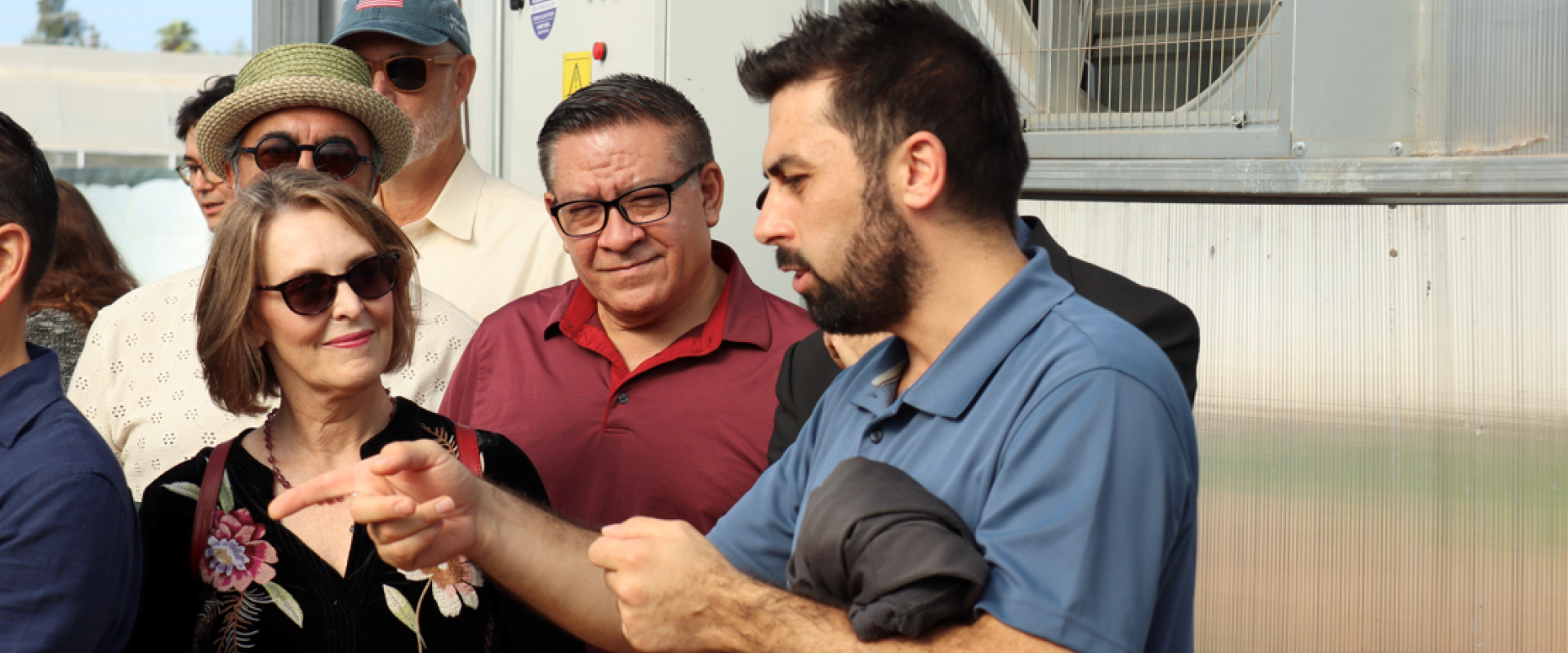
“On the Central Coast, agriculture is our number one industry, and farmers are already dealing with the impacts of a changing climate. We’re seeing greater water scarcity, more extreme heat, unpredictable growing conditions, and increased pressure from pests and disease,” said Congressman Salud Carbajal (CA-24). “These challenges affect not only what farmers can grow, but also their operating costs, their ability to remain competitive, and the stability of our food supply. That is why I believe agriculture needs to be at the forefront of climate and policy decisions. As a member of the House Agriculture Committee, I will continue to advocate for stronger investments to bolster our food supply, support agricultural innovation, and improve the conservation of our natural resources.”